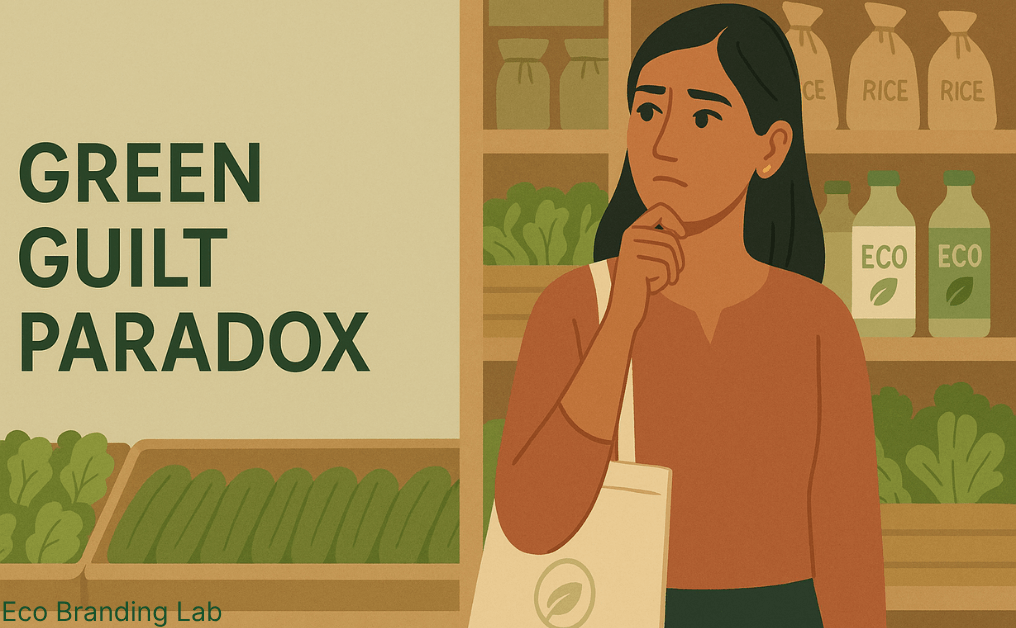
Introduction : The Green Guilt Paradox
Why Indian consumers don’t buy sustainable products — even when they care deeply — lies at the heart of what we call the Green Guilt Paradox.
This article unpacks why Indian consumers don’t buy sustainable products even when they care about the environment — and how smarter Green Marketing can bridge that gap. Search data shows that “Green Marketing” is a hot topic in India, but readers are no longer satisfied with theory. They want to understand real problems and practical solutions. This article breaks down the psychology behind India’s sustainability gap, explores real brand case studies, and shares five actionable marketing fixes—from messaging and packaging to pricing—that actually work in the Indian market.
Walk into any Indian home today, and you’ll probably hear conversations about climate change over chai. From Mumbai millennials sharing plastic-free lifestyle posts on Instagram to Bangalore professionals debating electric vehicles in office cafeterias, environmental awareness has never been higher in India.
And yet, there’s a strange disconnect at the marketplace. The same person who posts passionately about sustainability on LinkedIn often walks right past the organic section at the supermarket. The colleague who talks about reducing carbon footprints still chooses the cheapest brand at checkout, even after saying they’d “happily pay more for eco-friendly products.”
At Eco Branding Lab, we’ve found that this behavior isn’t about hypocrisy or lack of concern—it’s actually the opposite. Indian consumers care so much about the environment that it sometimes stops them from acting.
This is the essence of the Green Guilt Paradox: the people who care most about sustainability are often the least likely to buy green products.
And this sustainability paradox in India isn’t just confusing—it’s costly. Consumers end up feeling guilty for not living up to their values, while brands struggle to turn all that awareness into real sales. Understanding the psychology behind this gap is key for anyone who wants to make sustainable marketing in India actually work.
Why Indian Consumers Don’t Buy Sustainable Products — The Research Behind the Paradox
These insights show clearly why Indian consumers don’t buy sustainable products despite high environmental concern. The numbers tell a fascinating story about Indian consumers and sustainability. According to recent research, 83% of Indians describe themselves as “very concerned” about environmental issues—one of the highest rates globally. Meanwhile, 76% claim they’re willing to pay extra for sustainable products, significantly above the world average.
But here’s where it gets interesting: despite this overwhelming stated concern,
only 31% of Indian consumers consistently purchase eco-friendly alternatives when given the choice. Even more revealing, the gap between intention and action – is widest among those who express the strongest environmental values.
Consider these findings from a NielsenIQ India sustainability 2023 study tracking purchasing behavior across Indian metros:
- Consumers who rated themselves “extremely environmentally conscious” were – 23% less likely to complete purchases in sustainable product categories compared to those only “somewhat concerned”.
- When presented with multiple green options, highly eco-conscious consumers took – 40% longer to decide and abandoned carts at nearly ‘double’ the rate.
- The most eco-aware consumers spent 67% more time researching but felt less satisfied with their final purchase.
This is the sustainability paradox in action : caring more doesn’t lead to buying more green products. Instead, it often leads to analysis paralysis, guilt, and decision avoidance.
As Dr. Priya Nair, consumer psychologist at IIM Bangalore, explains: “We’re seeing a uniquely Indian version of this phenomenon. Traditional Indian values already incorporate sustainability—saving resources, reusing items, buying local. But when modern marketing presents ‘sustainability’ as a complex set of certifications and choices, it creates cognitive conflict rather than clarity.”
The implications are profound for green marketing in India. Brands targeting India’s most environmentally conscious consumers with conventional Green Marketing strategies – may actually be pushing them away. The psychology suggests that the louder brands shout about being “eco-friendly,” the more overwhelmed and skeptical these consumers become.
This research uncovers five hidden psychological mechanisms that explain why people don’t buy green products—and more importantly, what brands can do about it.
1. Moral Licensing: The Permission to Not Act
The Psychology Made Simple
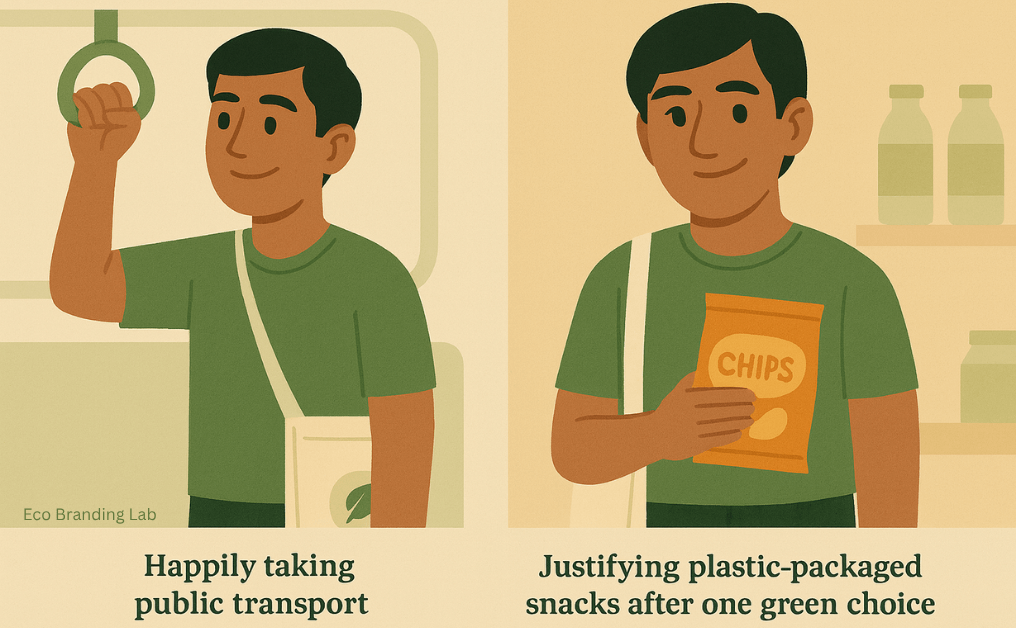
Imagine you take the train instead of a flight for your weekend trip. The next day at the supermarket, you pick up a bunch of plastic-packaged snacks and think, “It’s okay—I was eco-friendly yesterday.”
That’s moral licensing in action. It’s like having a mental “eco-bank account” where you deposit a good deed and then feel you’ve earned the right to withdraw with a not-so-green choice later.
Behavioral psychology research on moral licensing shows people are – 40% more likely to make a less sustainable choice after doing – something environmentally positive. In other words, when we feel good about one green action, our brains quietly give us permission to relax the next time.
Indian Case Study: The Swiggy Green Delivery Paradox
In 2024, Swiggy introduced a “Green Delivery” option that let customers pay an extra ₹5 for eco-friendly packaging. The feature became popular at first — people liked the idea of making a small, positive difference.
But Swiggy’s internal data revealed something surprising. After choosing the green option once, many customers started making less eco-friendly choices in their next few orders. They were 60% more likely to:
- Order from farther restaurants, which increased delivery emissions.
- Add extra disposable cutlery.
- Place multiple small orders instead of one combined one.
In the end, their total carbon footprint actually increased by 23% compared to regular users.
This perfectly shows moral licensing in action — after doing one green thing, people unconsciously felt they had “earned” the right to relax their behavior later. This behavior helps explain – why Indian consumers don’t buy sustainable products consistently — small wins often lead to later compromises.
Solution : Commitment Consistency Strategy
The key is to turn one-time “good deeds” into regular habits. Instead of celebrating a single eco-friendly act, brands should encourage people to build a green identity over time.
- Show progress: Let customers see how their choices add up (for example, “You’ve saved 25 plastic bottles this month”).
- Reward consistency: Give perks or discounts for making eco-friendly choices regularly, not just once.
- Reinforce identity: Use messaging like “You’re the kind of person who chooses better every time” instead of “Great job today.”
Imagine you’re rushing through a store after a long day. You pick up two face washes. One says simply: “Gentle Cleanser – ₹150.” The other is covered in badges: “Organic Certified, Carbon Neutral, Biodegradable, Fair Trade, EPR Compliant.”
Which one do you grab? Most people go for the first option. Why? Because your brain is already tired from making hundreds of decisions that day. Adding extra effort to decode all those green labels feels overwhelming.
This is cognitive load theory at work: when a message is too complex, our brain takes the easy way out. In Green Marketing, that means people often skip the sustainable product—not because they don’t care, but because it feels like too much work to understand.
2. Cognitive Load Theory : Why Green Marketing in India Feels Complex
The Psychology Made Simple
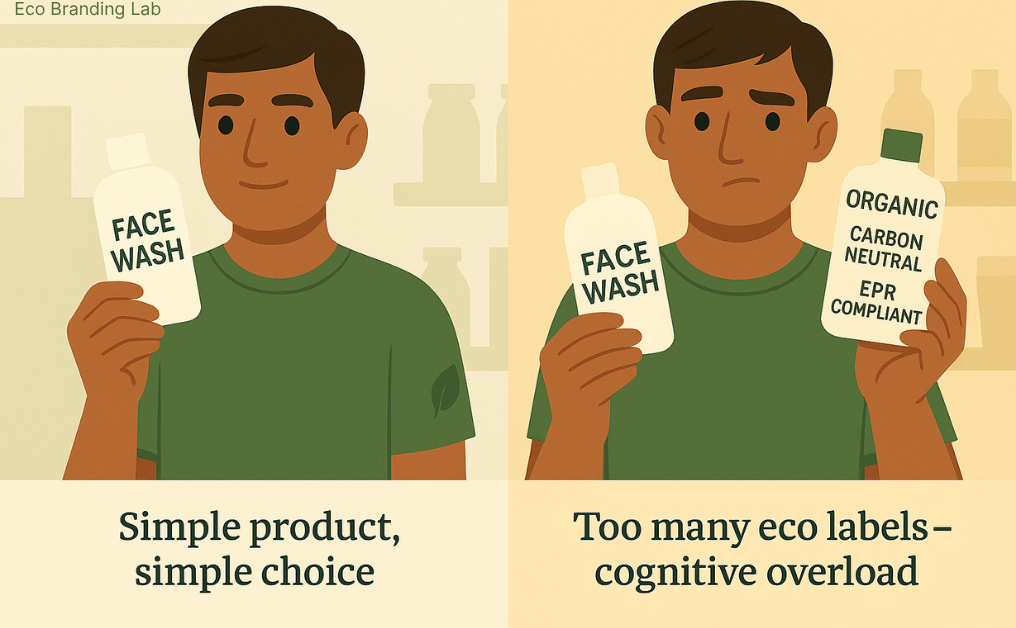
Imagine you’re rushing through a store after a long day. You pick up two face washes. One says simply: “Gentle Cleanser – ₹150.” The other is covered in badges: “Organic Certified, Carbon Neutral, Biodegradable, Fair Trade, EPR Compliant.”
Which one do you grab? Most people go for the first option. Why? Because your brain is already tired from making hundreds of decisions that day. Adding extra effort to decode all those green labels feels overwhelming. Nielsen Norman Group’s research on cognitive load explains why simpler labels convert better.
This is cognitive load theory at work: when a message is too complex, our brain takes the easy way out. In green marketing, that means people often skip the sustainable product—not because they don’t care, but because it feels like too much work to understand.
Indian Case Study: Chumbak’s Accidental Green Success
Most brands in India try to look eco-friendly by stuffing their packaging with badges and certifications. But lifestyle brand Chumbak did something different—without even planning it.
Instead of shouting about being “sustainable,” Chumbak used simple, feel-good messages like “Celebrating India” and “Artisan-Made.”
And guess what? It worked.
- They saw 67% more sales from eco-conscious shoppers compared to competitors.
- People made decisions 40% faster.
- Customer satisfaction went up by 25%.
Why ? Because consumers didn’t need to decode complex jargon. A simple line like “supports artisans” was easy to understand and emotionally powerful, so buying the product felt effortless.
Solution : Simplification Strategy
The trick is to make green choices feel simple, not stressful. Instead of overwhelming people with five different eco-badges, give them one clear message they can instantly understand—like “Plastic-Free” or “Supports Local Farmers.”
Use easy visuals (icons, symbols, colors) instead of long technical text. And rather than listing certifications, share a short emotional story—for example, “This product is handcrafted by women artisans in Rajasthan.”
When brands keep things simple, consumers don’t feel drained or confused. They can make sustainable choices quickly and confidently.
3. Cultural Authenticity Bias : Traditional vs. Commercial Green
The Psychology Made Simple
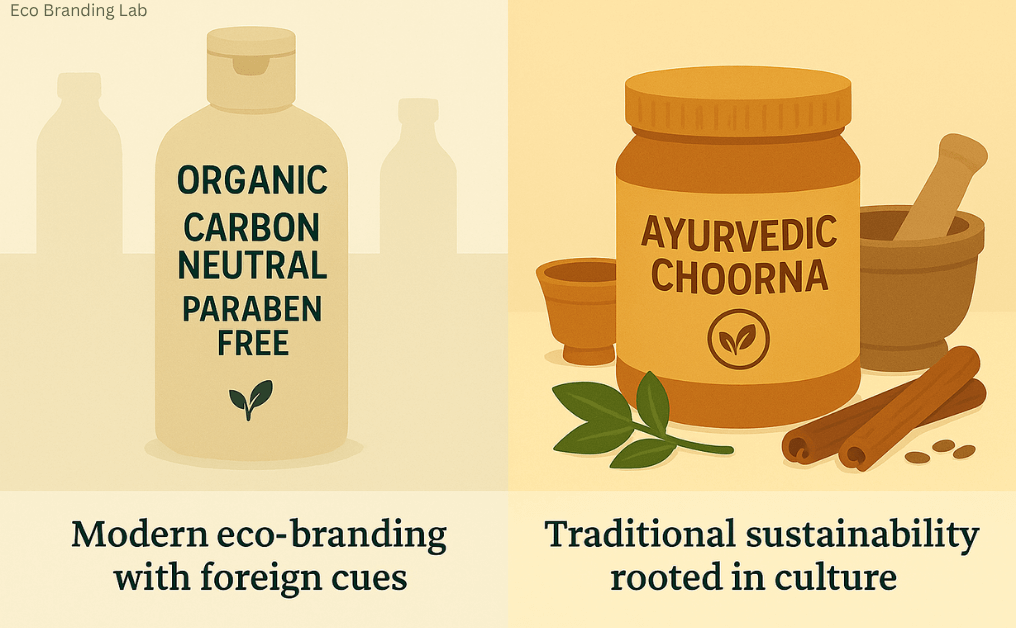
In India, people tend to trust sustainability when it feels authentic and connected to their culture. Think of everyday traditions like eating seasonal fruits, cooking in steel vessels, or buying from local artisans—these feel natural and genuine.
But when brands push “green” products using foreign-sounding terms or overly corporate campaigns, many consumers become skeptical. Even if they care about the environment, they hesitate to buy something that doesn’t feel aligned with Indian values.
This is cultural authenticity bias—the idea that people prefer eco-friendly practices rooted in tradition over products marketed in a way that feels imported or disconnected.
Indian Case Study: The Kama Ayurveda Authenticity Advantage
Luxury brand Forest Essentials tried to look sustainable by highlighting lots of international eco-certifications and green badges. But Kama Ayurveda took a very different route. Instead of focusing on labels, they talked about “ancient Ayurvedic traditions” and “grandmother’s recipes.”
The outcome was clear:
- Consumers rated Kama 34% higher on authenticity.
- Purchase intent was 45% stronger compared to Forest Essentials.
Why? Because Kama’s approach felt inherently Indian and culturally familiar, while Forest Essentials came across as performative. By tapping into tradition, Kama turned environmental concern into real buying behavior.
Solution: Cultural Authenticity Framework
The best way to make sustainability connect with Indian consumers is to root it in tradition. Instead of using heavy Western jargon like “carbon-neutral” or “EPR compliant,” use familiar words such as “time-tested,” “natural,” or “traditional.”
Brands can also weave in local stories, heritage practices, and cultural pride—for example, highlighting Ayurveda, artisan crafts, or age-old habits of reusing and conserving.
When Green Marketing feels like an extension of Indian wisdom rather than a foreign idea, consumers are more likely to trust it and make a purchase.
4. Choice Paralysis : The Sustainability Overwhelm
The Psychology Made Simple
Imagine you’re rushing through a store after a long day. You pick up two face washes. One says simply: “Gentle Cleanser – ₹150.” The other is covered in badges: “Organic Certified, Carbon Neutral, Biodegradable, Fair Trade, EPR Compliant.”
Which one do you grab? Most people go for the first option. Why? Because your brain is already tired from making hundreds of decisions that day. Adding extra effort to decode all those green labels feels overwhelming.
This is cognitive load theory at work : when a message is too complex, our brain takes the easy way out. In Green Marketing, that means people often skip the sustainable product—not because they don’t care, but because it feels like too much work to understand.
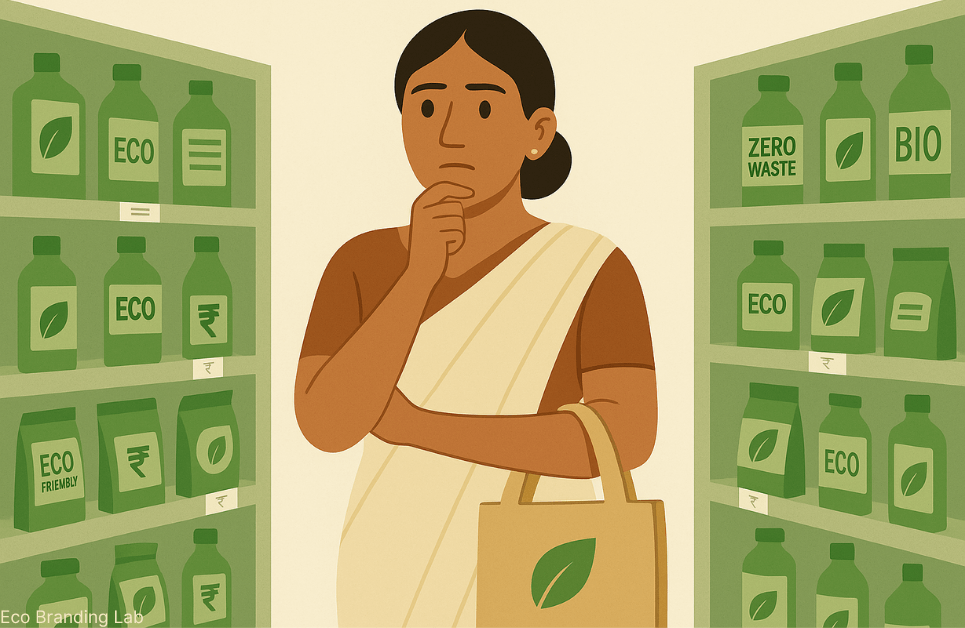
Choice fatigue and label overload are major reasons why – Indian consumers don’t buy sustainable products even when they want to. Psychology Today’s analysis of choice overload explains why too many options freeze buyers.
Indian Case Study : The Big Basket Organic Overload Experiment
To understand how too much choice affects shoppers, Big Basket ran an internal experiment.
- Group A saw only 12 carefully chosen organic products which were – typical grocery product type (like Organic rice, Organic cooking oil, Organic lentils etc. )
- Group B saw the entire range of 45+ products, each with detailed sustainability information and certifications.
The outcome was surprising:
- Group A (the curated one) had a 78% purchase rate and people made decisions in just 6 minutes.
- Group B (the full-choice group) had only a 31% purchase rate, people took 23 minutes to decide, and 40% of them were abandoned in carts.
In short, when people saw too many options, they felt confused and gave up—even if they wanted to buy something sustainable.
Solution : Progressive Choice Architecture
The best way to stop people from feeling overwhelmed is to make sustainable choices easier and faster. Instead of showing every eco-friendly product at once, brands can start with a small, curated selection—say, 3–4 “staff-recommended” or “most popular” options.
Add simple tags like “Best for Health” or “Best for the Planet” to help people make quick decisions. You can also offer short quizzes that guide shoppers toward products that fit their needs, like “Do you prefer organic or plastic-free?”
By revealing choices gradually and giving clear direction, brands can help customers feel confident instead of confused—turning good intentions into real action.
5. Identity Threat : When Eco Branding Feels Performative
The Psychology Made Simple
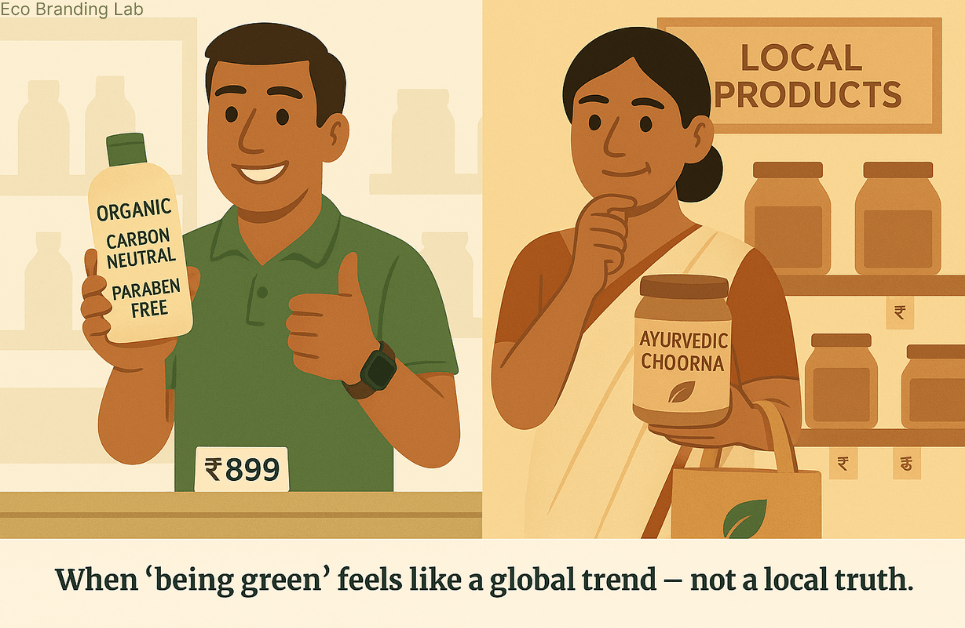
Sometimes, buying “eco-friendly” products can look like showing off rather than genuinely caring for the planet. When sustainability feels like a status symbol—something only the privileged can afford—many Indians pull back.
This is called identity threat. People don’t want their choices to seem fake or performative, like they’re trying to prove they’re “better” or “more woke” than others. Instead, they prefer everyday actions that feel authentic and rooted in their real values, such as reusing containers, saving water, or supporting local products. Harvard Business Review’s study on green consumer behavior discusses identity threats and performative sustainability.
So, when Eco-Branding feels too flashy or self-promotional, it can actually push people away instead of inspiring them to act sustainably.
Indian Case Study : Patanjali’s Authenticity Paradox
Patanjali sells huge amounts of organic and natural products and even runs some of India’s biggest sustainable farming programs. But here’s the interesting part — most customers don’t see it as a “green” brand.
People buy Patanjali products mainly for health, purity, and tradition, not because they’re eco-friendly. Yet, this approach has worked brilliantly. While other brands loudly market their “eco” credentials, Patanjali’s quiet, culture-first strategy has helped it earn massive revenues and strong customer loyalty.
Why? Because consumers feel that choosing Patanjali reflects their real cultural identity — not a need to show off environmental awareness. It’s sustainability that feels authentic, not performative.
Solution : Cultural Authenticity Approach
To make sustainable products appealing, they need to feel practical and relatable, not elite or expensive. Brands should present green products as everyday essentials, not luxury items for a select few.
The messaging should focus on health, tradition, and value — things that connect with Indian consumers emotionally and culturally — instead of preaching about “saving the planet.”
Also, offering smaller, affordable packs or refill options helps break the idea that sustainability is only for the rich. When eco-friendly products feel simple, useful, and within reach, more people are likely to choose them naturally.
The Future of Green Marketing in India : Invisible Sustainability
The Green Guilt Paradox shows that green marketing in India needs a fresh mindset. Instead of shouting about being “eco-friendly,” brands should make sustainability feel natural, effortless, and part of everyday life.
The best kind of sustainability doesn’t feel like a moral duty — it feels like a smart, practical choice. When products are high-quality, affordable, and rooted in Indian culture, people will choose them naturally, without feeling pressured to “do the right thing.”
This is what we call invisible sustainability — when environmental benefits are built into products and experiences so seamlessly that consumers don’t even have to think about them.
This approach solves all five major psychological barriers at once:
- stops moral licensing by making green choices feel normal, not heroic.
- reduces mental overload with clear and simple communication.
- respects cultural authenticity, connecting sustainability with Indian traditions.
- avoids choice paralysis by offering fewer, better-curated options.
- And it removes identity threat by focusing on practicality, not performance.
In the future, the most successful brands won’t need to “sell” sustainability — they’ll simply make it the default. That’s how India will move from talking green to living green.
Conclusion : Converting Care into Commerce
The Green Guilt Paradox isn’t a sign that people don’t care—it’s simply how human psychology works. Smart brands don’t fight this behavior; they work with it. Understanding why – Indian consumers don’t buy sustainable products is the – first step to designing campaigns that turn care into consistent action.
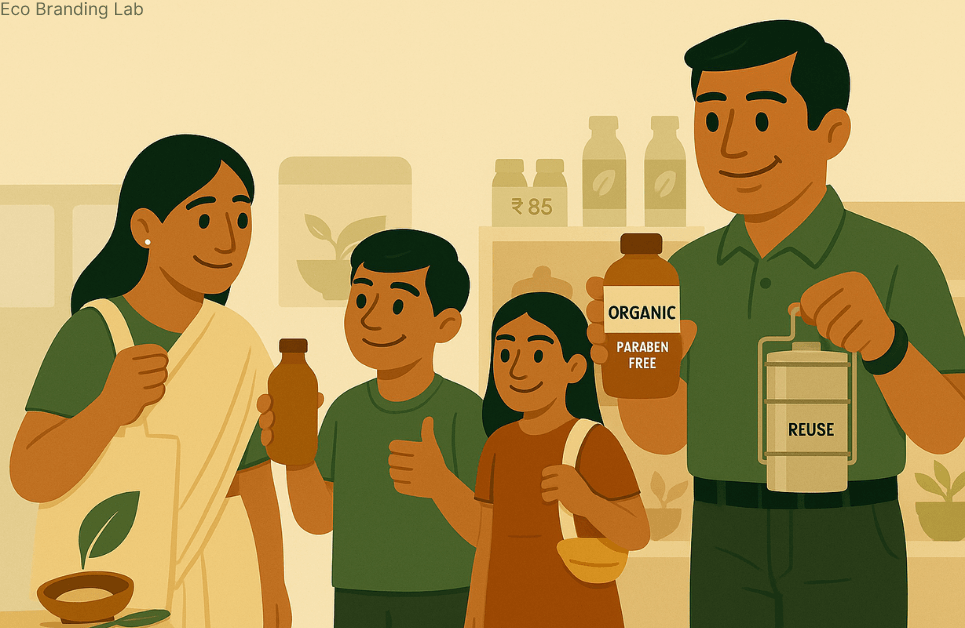
For sustainable marketing in India to truly succeed, companies need to stop treating eco-consciousness as a challenge and start seeing it as an opportunity rooted in Indian culture and everyday values.
The way forward is simple:
- Turn one-time “good deeds” into consistent habits that feel easy to maintain.
- Simplify sustainability messages so people instantly understand the emotional and practical benefits.
- Keep communication authentic and culturally grounded, not borrowed from Western ideas.
- Curate choices to help consumers decide faster and feel more confident.
- And finally, position green products as practical, everyday choices—not moral badges or status symbols.
When brands embrace this invisible sustainability approach, they remove the mental roadblocks that hold people back. Indians already care deeply about the environment—they just need the right cues and simpler choices to act on those values.
That’s how environmental care turns into environmental commerce—naturally, effortlessly, and authentically.
Looking for more insights on sustainable marketing psychology? Subscribe to Eco Branding Lab for real, research-backed strategies that actually work in the Indian market.
FAQs
Q: What is the Green Guilt Paradox?
The Green Guilt Paradox is the gap where environmentally concerned consumers buy fewer green products due to guilt, overthinking, and cultural mismatch—leading to decision avoidance.
Q: How can brands increase green purchases in India?
Simplify claims, use culturally authentic stories, offer trial/pricing options, curate choices, and reward consistent behavior with loyalty or impact tracking.